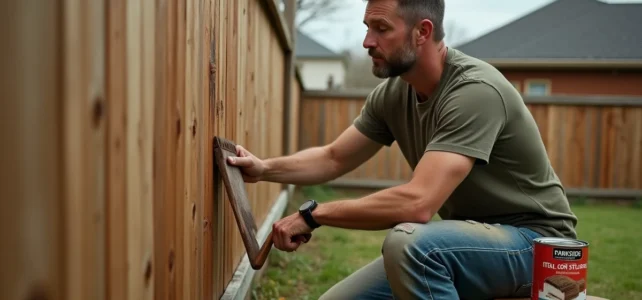
The Parkside wood stain marketed by Lidl is a polyurethane-based finishing product designed to protect both exterior and interior wood. It penetrates the fibers of the material rather than forming an opaque film on the surface, which distinguishes it from traditional paint. Its pricing, significantly below that of specialized brands in hardware stores, raises a legitimate question about its longevity.
Under-polymerization and slow drying: the technical trap to know
Before discussing appearance or durability, one point deserves mention: the actual drying of a polyurethane stain depends as much on the application conditions as on the product itself. User feedback on Parkside finishing products indicates a surface that remains tacky to the touch several days after application, despite adhering to the drying times indicated on the container.
This phenomenon has a name: under-polymerization. Polyurethane resin requires a minimal temperature threshold and controlled humidity to cure properly. Morning dew or light rain on a layer that is not completely dry can compromise the entire treated surface.
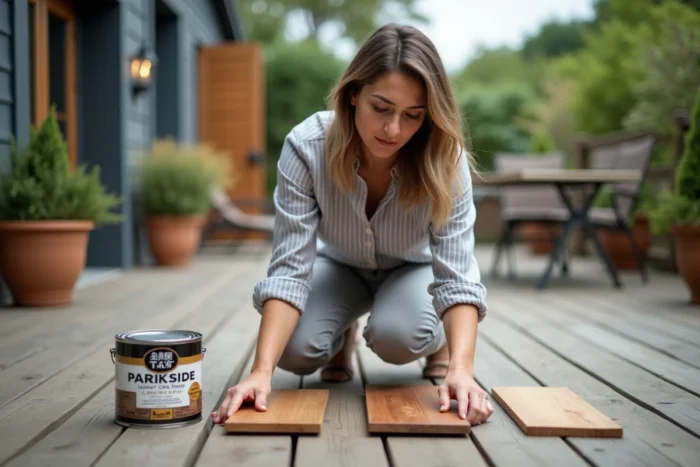
The solution is simple but rarely mentioned in application guides: test the product on a small area before treating an entire cladding or deck. A trial on a scrap board, left in the same exposure conditions as the final support, provides reliable feedback on the product’s behavior within a few days. Those who wish to delve deeper will find a review of the Parkside Lidl stain detailing the steps for a successful application.
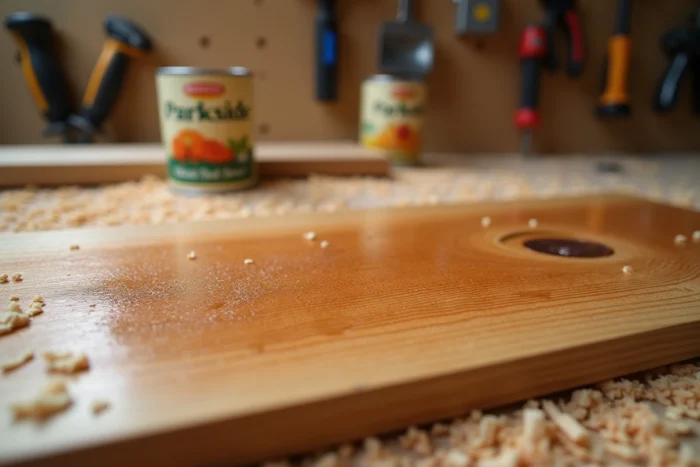
Parkside stain on exterior wood: what durability really means
The durability of a stain is not solely measured by its film thickness or the “high protection” label on the packaging. It depends on a set of factors that the product’s price does not summarize.
Surface preparation
Raw wood sanded to a fine grain absorbs stain better than already treated or dirty wood. On poorly prepared surfaces, even a high-end stain can blister. Experienced DIYers report that three coats of stain on sanded wood begin to blister after four years, regardless of the brand used.
Sanding and dusting are as crucial to durability as the choice of product. Skipping this step to save time compromises protection throughout its lifespan.
Number of coats and intercoat drying time
The Parkside polyurethane stain requires multiple coats to achieve a satisfactory level of protection. A common trap is applying the next coat too soon. The intercoat drying time indicated on the container is a minimum, not a target. In cool or humid weather, this time should be extended without hesitation.
- Ensure that the previous coat is no longer tacky to the touch before applying the next one
- Avoid any application if the temperature drops below the threshold indicated by the manufacturer, usually around ten degrees
- Do not apply in direct sunlight, as overly rapid surface drying traps solvents within the thickness of the film
Value for money of Parkside stain compared to specialized brands
Parkside is Lidl’s private label for tools and DIY products. Its business model relies on limited series sold during special promotions, meaning that the product is not always available in stores. This intermittency poses a concrete problem: it is impossible to repurchase the same batch for touch-ups six months later if the product has been removed from the shelves.
Specialized brands (V33, Bondex, Blanchon, Xyladecor) offer permanent availability and ranges tailored by wood type, exposure level, or finish. Their cost per liter is higher, but the consistency of formulation from batch to batch facilitates touch-ups and partial renovations.
For a one-time project on a small surface (shutters, planter, garden furniture), the Parkside stain represents a coherent economical choice. For a large terrace or exposed cladding, the product’s availability over time weighs as much as its initial price.
Application conditions: mistakes that ruin the result
Most negative feedback on stains, across all brands, points to application-related defects rather than product issues. Three mistakes consistently arise.
- Applying on damp wood or wood exposed to dew: trapped water under the film causes blistering within months
- Neglecting the direction of the grain: the stain should be applied along the grain for proper penetration, never in cross movements
- Using a roller instead of a wide flat brush: the roller deposits too much material, creates thick spots, and prevents proper penetration into the wood
These mistakes are not unique to Parkside stain. They apply to all polyurethane stains on the market. The difference is that a product sold at a low price will be judged defective more quickly than a premium product, while the true culprit is often the application technique.
The Parkside stain from Lidl fulfills its role of protecting and enhancing wood for small to medium-sized projects. Its polyurethane formulation offers reasonable resistance to the elements, provided that the preparation steps and drying conditions are strictly followed. The limiting factor remains its intermittent availability, which complicates subsequent touch-ups on treated surfaces.