
You have an hour free one weekday evening or an entire afternoon on the weekend, and you don’t know what to do with it. This uncertainty often arises because choosing a leisure activity requires answering three questions at once: how much time do I have, how much can I spend, and do I need to buy something to get started? Most lists of activity ideas overlook these constraints. This article places them at the center.
Sustainable leisure without equipment: the forgotten criterion of activity lists
Before looking for an original idea, ask yourself a simple question. Have you ever bought equipment for a hobby that you abandoned after three weeks? A sewing machine, a padel racket, an acrylic painting kit. The problem wasn’t the activity, but the fact of committing financially before knowing if the enjoyment would last.
Testing an activity without buying anything is the best way to know if it suits you. Public libraries and media libraries have repositioned themselves in recent years as true leisure spaces. Some offer the loan of musical instruments, board games, creative materials, and even DIY tools. Free collective workshops are sometimes organized there every week.
This principle of “test leisure” changes the game for those on a tight budget. Before investing in a guitar or a collector’s card game, just visit these spaces where you can search on Blognet News for complementary ideas tailored to your geographical situation and current desires.
Zero-budget activities that last
The most sustainable leisure activities often cost nothing. But “free” does not mean “without effort in choosing.” An activity that you will still be doing in six months generally shares three characteristics.
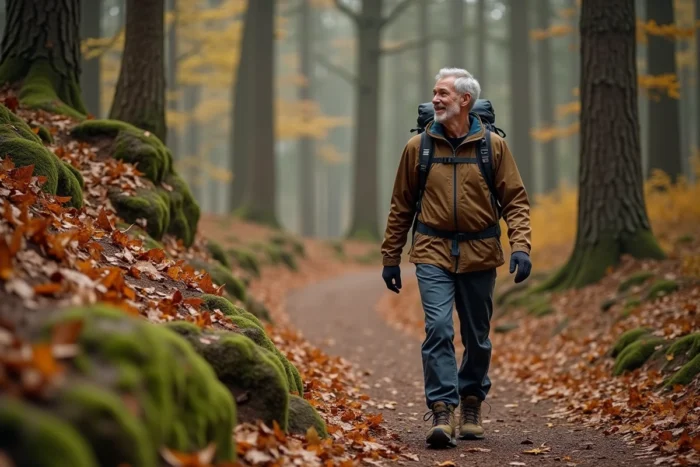
- It adapts to the available time: a twenty-minute walk in your neighborhood or a two-hour outing in the forest falls under the same leisure activity, walking, without a fixed schedule constraint.
- It does not depend on a specific location or equipment: keeping a journal, drawing in a notebook, cooking with what’s left in the fridge, birdwatching from a balcony.
- It provides a visible result or measurable progress, even modest: a page written, a successful dish, a new route explored.
Walking and running illustrate this logic well. The French have significantly increased their time spent on outdoor sports in recent years. Running, cycling, and brisk walking have become ingrained practices in daily life, not just vacation pastimes.
Cooking remains one of the most underrated activities as a hobby. Preparing a meal with leftovers requires creativity, produces a tangible result, and costs no more than the usual food budget.
Creative hobbies and family games: stepping outside conventional ideas
Creative workshops often come up in suggestions for free time. The problem is not the idea; it’s the approach. Buying a complete diamond painting or pottery kit before having tried the activity even once often leads to abandonment.
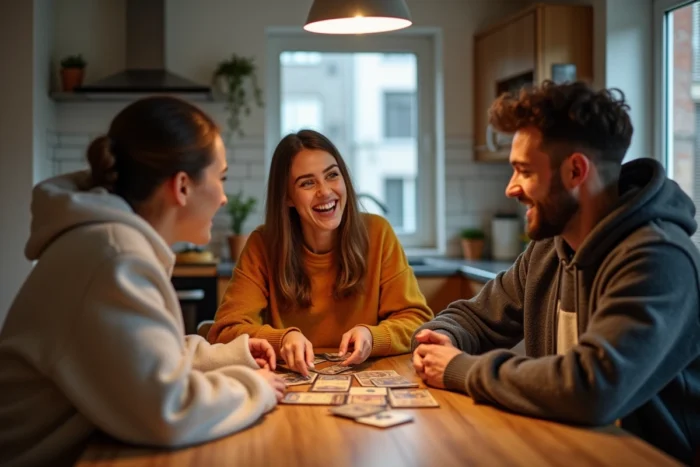
A more realistic approach is to start with what you already have at home. A few sheets of paper, a pencil, and an online tutorial are enough to start drawing. A classic deck of cards covers dozens of different games, from belote to rummy, and is suitable for both two players and a family game night.
For family or friend gatherings, board games borrowed from the media library allow for varied enjoyment without accumulating boxes. Free outings (parks, public gardens, sports facilities accessible in public spaces) also offer a different atmosphere from the living room, without an entry fee.
The trap of “trendy” hobbies
Every year, an activity goes viral on social media. Resin, punch needle, indoor aquaponics. The initial excitement often masks a high entry cost and a frustrating learning curve. Before jumping on a trend, check if you can try it for free or at a low cost in a collective workshop near you.
Outdoor activities and local outings: leveraging what already exists
You don’t need to go on vacation to enjoy outdoor activities. Municipalities and metropolitan areas have been developing free-access sports facilities for several years: fitness trails, multi-sport fields, marked cycling paths. The Nantes metropolitan area, for example, provides spaces for exercising freely without registration or subscription.
Local assistance for accessing leisure activities is often unknown. Some local authorities offer discounted cards for sports and cultural activities. These programs primarily target young people and families, but the criteria vary from one city to another. A visit to the town hall or the website of your intercommunal authority is enough to check.
“Micro-leisure” is also gaining ground: repairing an item, refurbishing a piece of furniture found at a flea market, growing a few tomato plants on a balcony. These short and concrete activities meet a growing need to do something tangible with one’s hands, without a program or registration.
- Repairing everyday objects (Repair Cafés, free video tutorials)
- Mini-garden on a balcony or windowsill, using seeds collected or exchanged
- Basic sewing and repurposing clothing, starting with a simple alteration
- Urban exploration on foot: discovering an unknown neighborhood in your own city each week
Free time and limited budget: three criteria to avoid mistakes
Choosing a lasting leisure activity is not about inspiration but about a simple filter. Ask yourself three questions before starting: can I try it without buying anything, can I practice it in less than an hour, and am I still interested when no one is watching?
The first criterion eliminates leisure activities that require too heavy an initial investment. The second rules out those that need long and regular time slots, often incompatible with a busy schedule. The third filters activities chosen by social mimicry rather than genuine interest.
A sustainable hobby is one that you still engage in three months after discovering it. Everything else, the memories of introductory workshops, forgotten subscriptions, equipment gathering dust in a closet, falls under fleeting enthusiasm. It’s better to test five activities for free than to buy one blindly.