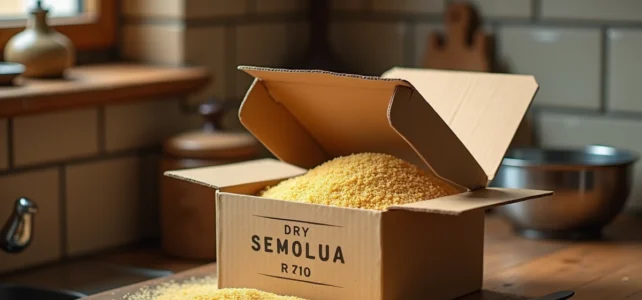
Durum wheat semolina falls under the Minimum Durability Date (MDD), not a Use By Date (UBD). This regulatory distinction changes everything: exceeding the MDD does not constitute an infringement and does not mean that the product is dangerous. The risk never comes from the date printed on the packaging, but from what has happened between packaging and opening the bag.
Water activity and microbial proliferation threshold in dry semolina
A dry cereal product like semolina has a very low water activity (Aw), generally below the threshold necessary for bacterial or fungal growth. As long as this Aw remains low, neither salmonella nor mycotoxin-producing molds can develop.
The problem arises when ambient humidity raises this Aw. A poorly sealed bag in a humid kitchen, storage under a sink, or transfer to a still-wet jar: each of these scenarios breaks the protective barrier. From there, semolina becomes a favorable substrate for microorganisms, regardless of the date printed on the package.
We regularly observe semolinas stored for several months past the MDD without any alteration, simply because the container remained airtight and the storage location dry. Conversely, semolina still “within the dates” but exposed to a humidity episode can already pose a problem.
To better understand the degradation mechanisms specific to this product, the information regarding the storage of expired semolina on Pharmanco details the interactions between humidity, temperature, and storage duration.

Signs of semolina spoilage: what to actually check
Visual and olfactory examination effectively replaces reading the MDD to assess the state of semolina. Three reliable indicators can help make a decision.
- Presence of filaments, cocoons, or small insects (food moths, weevils): a sign of infestation. The semolina must be discarded entirely, even if only a few larvae are visible, as droppings and insect fragments contaminate the entire batch.
- Rancid or sour smell: the lipid fraction of durum wheat semolina, although low, oxidizes under prolonged heat. This rancidity produces undesirable compounds and irreversibly alters the taste.
- Black, green, or white cottony spots on the surface: fungal development. Some molds present on cereals produce mycotoxins that survive cooking.
If none of these signals appear, if the semolina flows freely without forming clumps, and if its smell remains neutral or slightly cereal-like, it is consumable. However, we recommend cooking it normally (boiling water, steam) rather than consuming it rehydrated cold.
Food poisoning related to semolina: symptoms and actual severity
Semolina altered by humidity or contaminated by insects can cause food poisoning with typical digestive symptoms: nausea, abdominal cramps, diarrhea, sometimes vomiting. These manifestations generally appear within hours of ingestion.
The severity depends on the type of contaminant. Bacterial contamination (staphylococci, Bacillus cereus, common on cereals) causes acute disorders but often resolves within one to two days in a healthy adult. Mycotoxins pose a different problem: their toxicity is cumulative, and cooking does not destroy them.
For immunocompromised individuals, young children, and the elderly, the margin of tolerance is narrower. In case of doubt about the state of the product, the benefit/risk ratio clearly leans towards disposal.
Bacillus cereus and cereals: an underestimated duo
Bacillus cereus forms heat-resistant spores that survive cooking. The danger does not come from the dry semolina itself, but from cooked semolina left at room temperature for several hours. The spores germinate, the bacteria proliferate, and produce emetic or diarrheal toxins. This risk concerns both “within the dates” semolina and expired semolina.
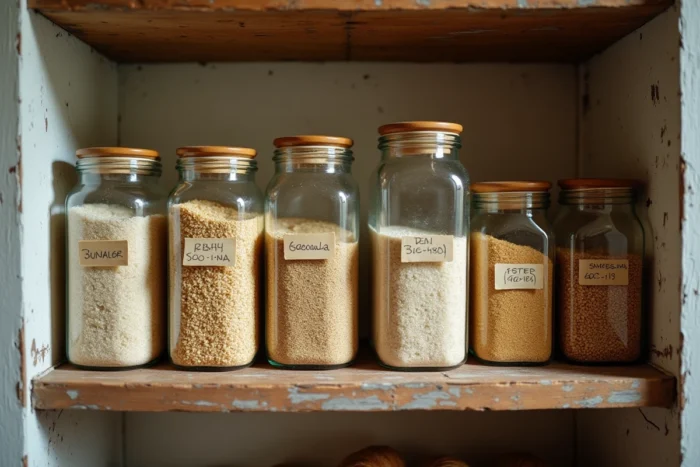
Optimal storage of semolina to extend its shelf life
The container takes precedence over the date. An airtight glass or rigid food-grade plastic jar provides the best protection against humidity and insects. The original cardboard, once opened, no longer offers any protection.
The ideal location is a closed cupboard, away from heat sources (oven, burners) and steam (hood, kettle). The ambient temperature of a temperate kitchen is perfectly suitable. There is no need to refrigerate semolina: the cold from the refrigerator generates condensation each time the jar is opened, which accelerates moisture uptake.
Preventing infestation by food moths
Food moths lay eggs directly in cardboard or paper packaging, sometimes even before purchase. Immediate transfer to an airtight container upon returning from shopping limits this risk. If an infestation is detected in a cupboard, all opened cereal products must be inspected.
- Clean the entire cupboard with white vinegar before replacing the products.
- Space out the containers to spot any traces of cocoons or filaments between jars.
- Monitor newly purchased semolinas by isolating them for a few days in a separate container before integrating them into the stock.
Well-stored dry semolina remains consumable well beyond its MDD, sometimes for several months without any loss of nutritional or organoleptic quality. The only reliable judge remains sensory examination: appearance, smell, texture. The date printed on the packaging is merely a commercial indicator, not a health boundary.