
An embedded electric strike that fails one winter morning means a blocked gate and restricted access while waiting for a locksmith. This scenario is often seen in installations that are only a few years old, simply because no one took the time to check the mechanism between seasons. Proper maintenance of an embedded electric strike requires neither advanced skills nor expensive tools, but a minimum of regularity and the right actions.
Electrical Diagnosis Before Touching the Mechanism
When an embedded strike malfunctions, the common reflex is to dismantle the casing to inspect the latch. This wastes time. In most cases, the problem lies upstream, in the power supply circuit.
A constant buzzing or irregular clicking at the moment of activation indicates an electrical fault, not a mechanical jam. Before blaming the strike itself, three elements should be checked in this order:
- The circuit breaker dedicated to the strike: an intermittently tripping breaker indicates an overload or short circuit on the line, often caused by a damaged cable in the masonry.
- The low voltage transformer: its output voltage must match that indicated on the strike. An aging transformer may deliver insufficient voltage, causing partial unlocking of the latch.
- The connections at the terminals: wire oxidation, especially outdoors, creates false contacts. Tighten the terminals and replace any wire with a cracked sheath.
This preventive electrical diagnosis takes about ten minutes. It avoids unnecessarily dismantling a functioning mechanism and exposing it to dust or moisture during the operation. To learn how to maintain an embedded electric strike thoroughly, a dedicated guide details each step.
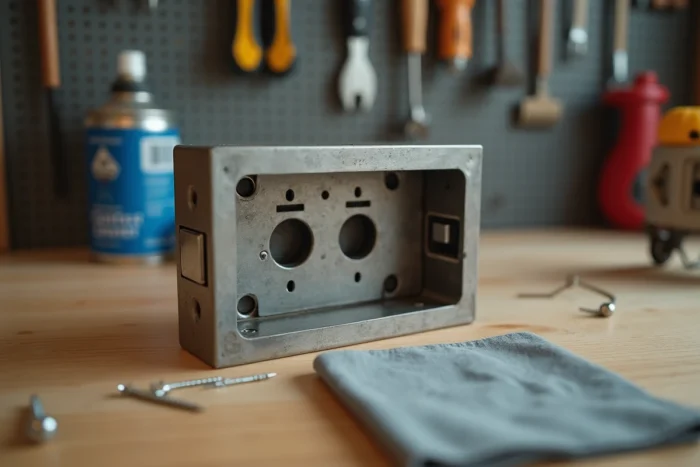
Lubrication of the Embedded Strike: The WD-40 Trap
There are still recommendations to spray WD-40 into the mechanism to unblock a stubborn latch. Professional locksmiths now advise against this. This type of penetrating product works temporarily, but leaves a greasy film that attracts dust and eventually clogs the mechanism. On an embedded strike, where access is limited, this clogging worsens the jamming over the months.
The right product is a dry lubricant based on graphite or PTFE (Teflon). Apply a small amount directly to the latch and the visible moving parts through the opening of the strike. The dry lubricant does not retain particles, and its effect lasts longer in an embedded housing where ventilation is nearly non-existent.
Recommended Lubrication Frequency
A dry lubricant application twice a year is sufficient for a strike in domestic use. Professionals recommend scheduling these interventions in spring and autumn, before periods of high humidity or frost. This logic of biannual preventive maintenance applies to all closure points in the house: lock, rods, strike.
Corrosion on an Embedded Strike Exposed to the Elements
A strike installed on an outdoor gate or a door leading to a garden faces stresses that indoor models do not: direct rain, condensation, freeze-thaw cycles. Corrosion first attacks the fixing screws and the faceplate, then spreads to the internal moving parts.
Visually inspect the strike plate at each change of season. The first signs of rust (orange spots around the screws, marks on the frame) call for immediate cleaning with a stiff brush and the application of a suitable anti-corrosion product for metals. Replacing the original screws with stainless steel screws is a minimal investment that eliminates the most common weak point on outdoor embedded strikes.
Sealing the Housing in the Frame
Water that stagnates in the embedding cavity accelerates degradation. A thin silicone seal can be applied around the upper edge of the plate to prevent direct infiltration, provided it does not obstruct access to the mechanism. Feedback on this point varies according to the strike models and the configuration of the frame, but the principle remains the same: limit stagnant water in the housing.

Alignment of the Latch and the Strike: The Adjustment That Is Often Forgotten
Over time, a wooden frame shifts due to humidity. An aluminum frame can misalign if the fixings loosen. The result is the same: the latch no longer lines up with the opening of the strike. The mechanism strains with each closure, prematurely wearing out the electromagnet and the moving latch.
Check the alignment by observing wear marks on the faceplate of the strike. Asymmetrical scratches or visible rubbing on one side indicate misalignment. The adjustment consists of repositioning the strike in its housing or, if the misalignment is slight, slightly filing the opening of the plate with a flat file.
On a door equipped with an intercom or video intercom with remote unlocking control, poor alignment results in an audible release (the click of the electromagnet) without the door actually opening. The system works, but the latch hits the edge of the strike. This specific symptom always points to an alignment issue, not an electrical fault.
Annual Maintenance Schedule for an Embedded Electric Strike
Rather than intervening when a malfunction occurs, longevity is gained by planning two visits per year. A spring maintenance and an autumn maintenance cover most risks.
- Spring: visual inspection of corrosion after winter, graphite lubrication of the latch and moving parts, checking the tightness of the fixing screws.
- Autumn: testing the electrical circuit (circuit breaker, transformer, terminals), checking the latch-strike alignment, cleaning the faceplate and applying an anti-corrosion product if the strike is outdoors.
- At each intervention: operate the strike several times via the intercom or keypad to ensure that the unlocking is clear and silent, without forcing or abnormal noise.
This program can be noted on a sheet attached to the electrical panel. Two interventions of fifteen minutes per year are sufficient to prevent most breakdowns on a domestic embedded strike. The mechanism is simple, but it does not forgive prolonged neglect, especially outdoors where the elements constantly work against it.