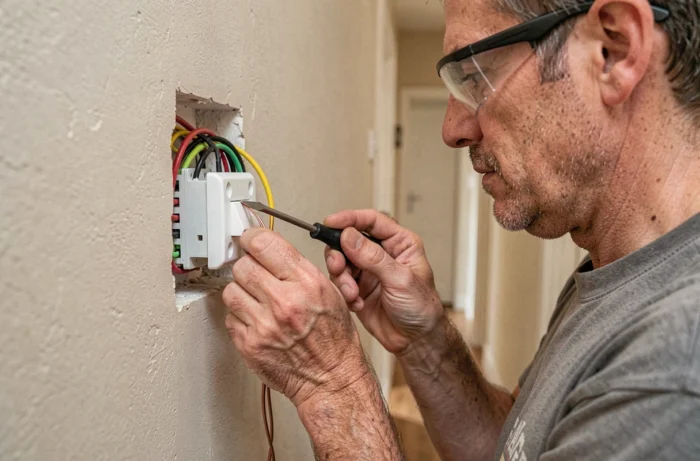
The connection of a two-way switch remains one of the most common setups in home installations. Two switches, one light fixture, the ability to turn on or off from two different locations: the principle is simple, but the wiring has some subtleties that classic diagrams do not always explain.
Compliance with NF C 15-100: what changes for a new two-way circuit
Most tutorials describe the wiring without addressing the regulatory question. For an individual adding a lighting circuit (even a simple two-way switch in a hallway), the applicable standard depends on the date of the project.
CONSUEL has reminded that if the date of the building permit, prior declaration, contract signing, or order is after August 31, 2025, it is the 2024 edition of NF C 15-100 that applies. Schneider Electric confirmed this deadline in its presentation of the new series, published at the end of August 2024.
In renovation, the standard is not retroactive: an old two-way switch setup that is correct but made under a previous edition remains compliant as long as it is not modified. However, any newly created or heavily modified section must comply with the current edition. Moving a light point or pulling a new lighting circuit is enough to trigger this obligation.
Before starting, check if your project involves a simple switch replacement (no new normative constraints) or a circuit creation (compliance with the 2024 edition required for projects after the mentioned date). This distinction determines the choice of equipment and cable section.
Phase wire, travelers, and lamp return: anatomy of the two-way circuit
The two-way switch relies on a principle that many DIYers know without always mastering: only the phase wire passes through the switches. The neutral and earth connect directly to the light fixture from the electrical panel, without passing through the switch boxes.
When you want to install a two-way branch at home, you need to identify three elements in the circuit:
- The phase, coming from a dedicated circuit breaker in the panel, arrives at terminal L (or common terminal) of the first switch.
- Two traveler wires connect terminals 1 and 2 of the first switch to terminals 1 and 2 of the second. These are what allow the switching.
- The lamp return goes from terminal L of the second switch to the light fixture, thus closing the circuit.
The most common mistake is to swap the phase and lamp return, or to cross the travelers between the two boxes. The result: one switch works, the other does not, and the diagnosis quickly becomes frustrating.
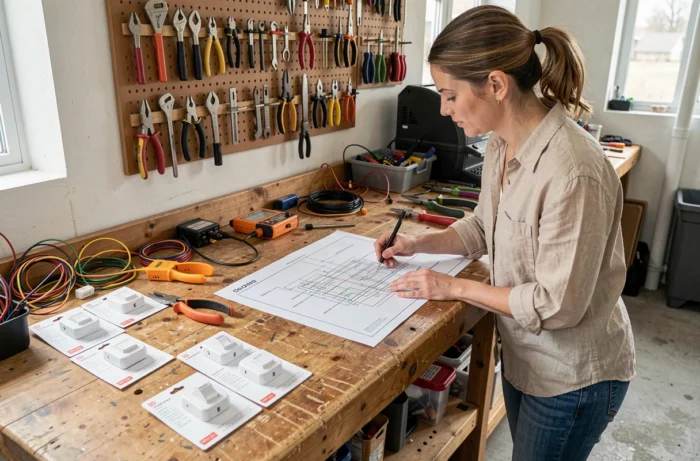
Common wiring errors and concrete diagnosis
A two-way switch setup that does not work properly almost always reveals the same problem: the travelers are not connected to the same terminals on both switches. On some models, the terminal markings vary. A “1” from one manufacturer may correspond to an “L1” from another.
To diagnose, use a multimeter in continuity mode, with the power off. Test each traveler between the two boxes to ensure they connect terminal 1 to terminal 1 and terminal 2 to terminal 2. If you find a crossover, simply swap the two travelers on one of the switches.
Another trap in renovation: old installations sometimes use non-standard color wires. The standard requires blue for neutral and green-yellow for earth, but the travelers and phase can vary depending on the installation period. Identification with a multimeter remains the only reliable way to identify each conductor in an old box.
Particular case of identical replacement
Replacing a two-way switch with a new model of the same type (same number of terminals, same brand) generally poses no difficulty. Identify the position of each wire before removing the old mechanism, photograph the wiring, and then reproduce the connections on the new one.
The problem arises when changing ranges or manufacturers. The location of the terminals differs, and the markings are not universal. Always compare the diagrams provided with each mechanism before reconnecting.
Cable section and protection at the electrical panel
A two-way lighting circuit is protected by a circuit breaker in the panel. The common cable section for a domestic lighting circuit remains low-section copper, but the length of the run between the panel and the switches may require a larger size to limit voltage drops.
For the connection to the panel, the lighting circuit must have its own circuit breaker. Grouping a two-way switch with other circuits on the same circuit breaker is technically possible within the limit of the number of light points allowed by the standard, but complicates diagnosis in case of problems.
- Check the cable section between the panel and the first switch, then between the two switches, and then between the second switch and the light fixture.
- Ensure that the circuit breaker matches the appropriate rating for the lighting circuit.
- If in doubt about the sizing, an electrician can measure the actual voltage drop along the run.
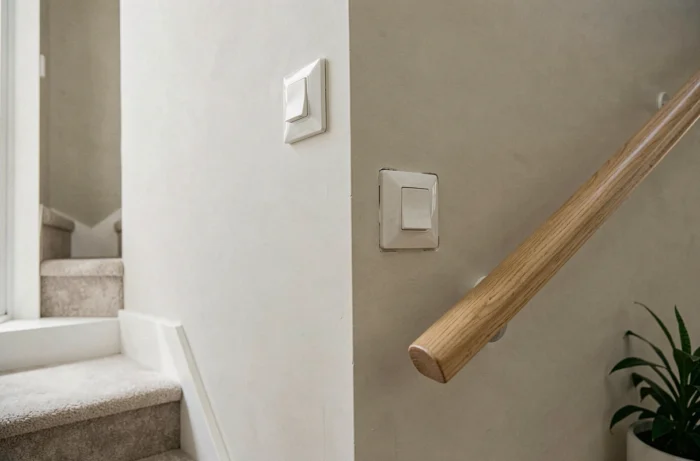
The issue of compliance also arises at the panel level: an added circuit must be marked and identified. A simple marking on the circuit breaker cover is sufficient, but its absence can pose problems during an inspection or resale.
The two-way switch setup does not present any major technical difficulties for a knowledgeable DIYer, provided they respect the order of connections and check each connection before re-energizing. The only variable that truly changes the game is the regulatory framework applicable to your project: simple substitution or circuit creation, the answer conditions everything else.